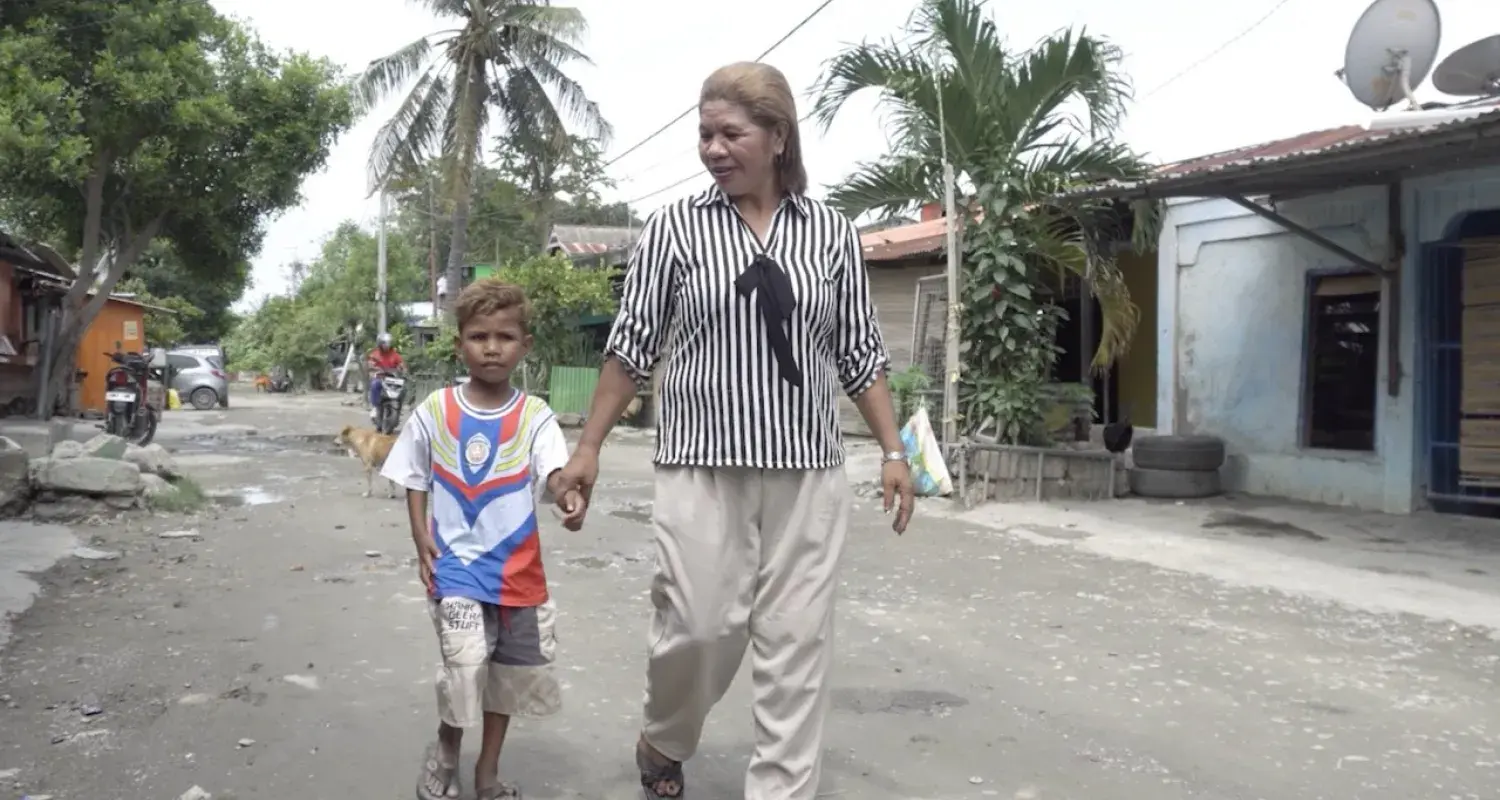
After her son was diagnosed with dengue, Afliana Soares became one of the community leaders helping her neighbours in Dili understand the Wolbachia method. Releases have now covered the entire urban population of Timor-Leste's capital, around 240,000 people, through a collaboration between the Ministry of Health, the World Mosquito Program, Action on Poverty and the Menzies School of Health Research.
Afliana Soares remembers the night like it was yesterday. Her son had a fever that wouldn't shift.
"I took him to the clinic and the doctor advised us to go home and give him medicine to reduce his fever, but the fever wouldn't go down," she says.
Despite the medicine, her son's fever continued to rise, so Soares took him to another clinic.
"The doctor took a blood sample and the results showed that my child was positive for dengue. I didn't expect it."
Speaking from a community centre in a leafy neighbourhood in Dili, Timor-Leste's coastal capital, Soares says the experience changed her perspective. Dengue has become an increasing public health concern in Asia's youngest nation, with several major outbreaks reported over the past decade. By the end of March, Timor-Leste, also known as East Timor, had recorded more than 3,500 dengue cases and over 20 deaths.
Inspired by personal experience
For Soares, her family's experience with dengue became the motivation to help protect others.
"I'm grateful my son is healthy again," she says. "Because of the information I received, I always shared it with the community."
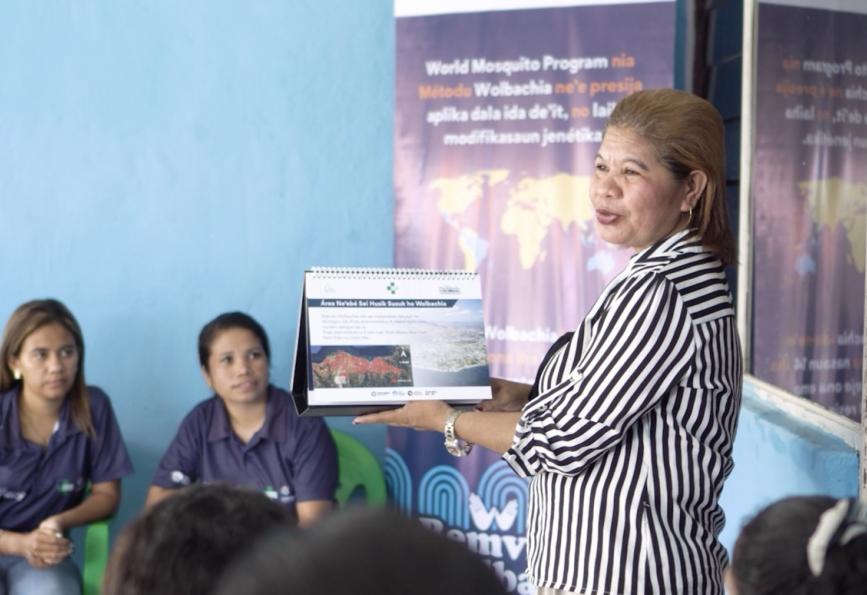
As a respected community leader, Soares helped residents understand the recent Wolbachia mosquito releases as part of a joint effort to reduce mosquito-borne diseases across the country.
The collaboration between the World Mosquito Program (WMP), Timor-Leste's Ministry of Health (MoH), Action on Poverty (AOP) and the Menzies School of Health Research saw releases cover the entire urban population of Dili — around 20 square kilometres and approximately 240,000 people. The project, which concluded earlier this year, was also supported by the Australian Government through the Australian NGO Cooperation Program (ANCP) and the Macquarie Group Foundation.
"I've been very proud to be part of this programme," adds Soares. "As a community and organisational leader, I informed people not to be afraid if someone from the Ministry of Health or Menzies came to distribute Wolbachia mosquitoes, because the aim is to prevent dengue."
Tackling a growing health challenge
Timor-Leste, home to around 1.4 million people, has experienced repeated dengue outbreaks in recent years, with mosquito-borne diseases continuing to place pressure on communities and the health system.
Professor Nelson Martins, Senior Technical Advisor, says the country's partners recognised the potential of WMP's Wolbachia method as a sustainable approach to dengue prevention.
"Through meetings with the experts from the World Mosquito Program (WMP), we concluded that the Wolbachia method is a good technology, suitable for long-term protection with an effective budget," he says.
"So when WMP was looking for partners in Timor-Leste, Menzies was very open and ready to support implementation."
Building community trust
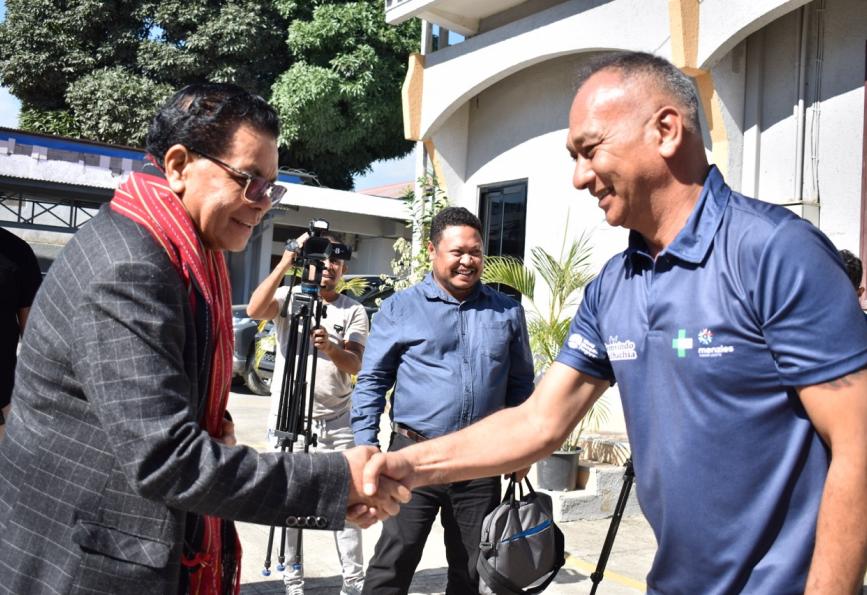
For Dr Heitor da Costa Pereira, Director of the National Directorate for Disease Prevention and Control at the Ministry of Health, the programme's success has depended on strong community engagement from the outset.
Working closely with community leaders such as Soares, Pereira believes local support has been critical to building trust and encouraging participation.
"We all know that dengue, malaria, chikungunya and Zika are diseases experienced in tropical countries," he says. "Nowadays we live in an era of globalisation. We must embrace technology and innovation to help reduce illness and save lives."
WMP's Wolbachia method is already showing encouraging trends across Dili, with long-term monitoring continuing over the coming years.
Be Part of the Solution: Join Our Community
Discover how we’re transforming lives and combating mosquito-borne illnesses globally. Sign up for exclusive insights and updates delivered straight to your inbox.
Looking to the years ahead
Pereira is quick to emphasise that lasting change takes time.
"It must be understood that nothing is instant. When we start something, the process will take time. I know people want results immediately, but patience is needed."
Martins agrees and hopes the programme can eventually expand to other parts of the country.
"Since the beginning of the Wolbachia programme, experience and knowledge have grown across the Timorese community," he says. "Before, very few people knew about the programme. Now the government and many communities are talking about it."
"Hopefully, in the coming years we will see its impact, and the government and communities can continue expanding the programme to other areas as we work towards a dengue-free Timor-Leste."